
Table of Contents
- Start With a Risk Assessment, Not a Sales Pitch
- How to Choose a Security Provider Using a Comparison Checklist
- Comparing DIY and Professional Security System Installation
- What Professional Security Monitoring Should Deliver
- Security System Contract Terms You Need to Read
- Matching Equipment and Smart-Home Integration to Your Property
- Commercial and Guard-Service Criteria Most Buyers Miss
- Conclusion
- Frequently Asked Questions
Last Updated: October 16, 2026
Start With a Risk Assessment, Not a Sales Pitch
Learning how to choose a security provider starts with one honest question: what are you actually protecting?
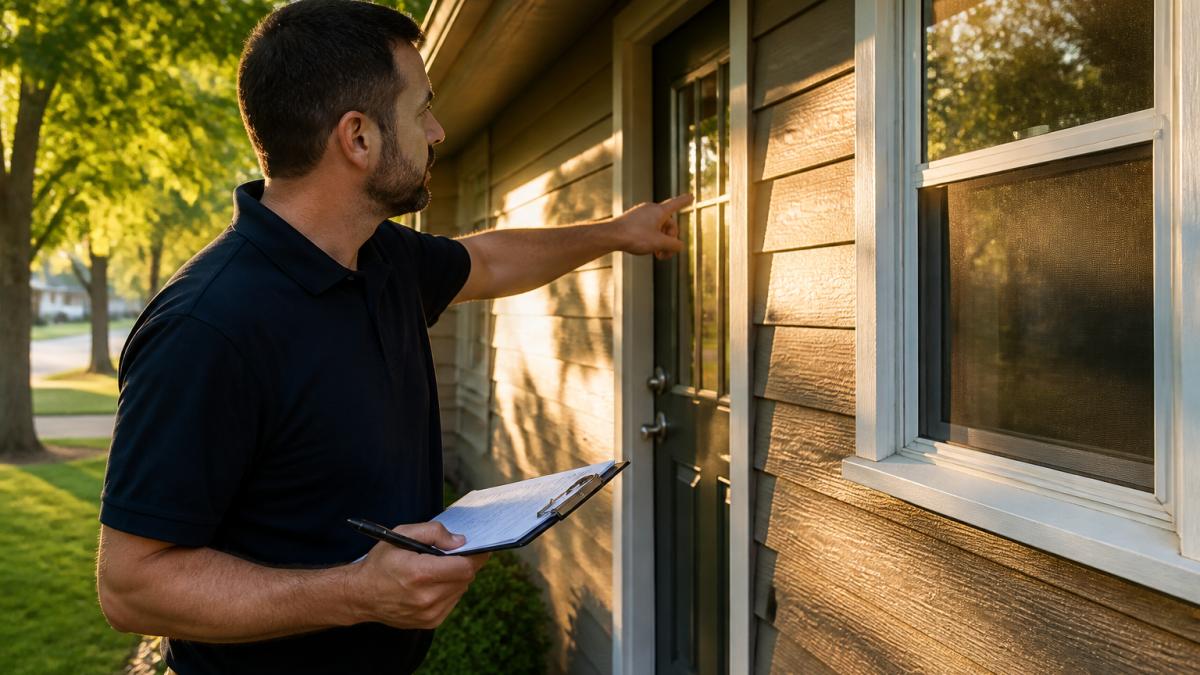
A real risk assessment makes a difference. A provider who starts with pricing is selling equipment. A provider who starts with questions is solving a problem.
Two identical houses rarely need the same system: a family that travels frequently needs remote visibility and 24/7 monitoring, while a retail shop in Walker's Point that has dealt with after-hours break-ins needs camera coverage that deters, not just records.
Mapping At-Risk Areas and Entry Points
Every property has predictable weak spots, and a competent provider finds them before recommending any camera.
- Ground-floor windows and doors, including basement and garage access
- Side and rear entrances hidden from the street
- Driveways, gates, and detached structures
The assessment should produce a written summary of at-risk areas and entry points matched to equipment. If a provider skips this and jumps to a package price, that's your first warning sign.
How to Choose a Security Provider Using a Comparison Checklist
A security provider comparison checklist turns a sales conversation into an evaluation: score every company on the same criteria, then compare totals.
| Criterion | What to Verify | Red Flag |
|---|---|---|
| Licensing | State and local license numbers | Refuses to provide numbers |
| Insurance | Liability and workers' comp coverage | "We're covered" with no proof |
| References | 3+ local customers you can call | Only national testimonials |
| Response time | Documented monitoring protocol | Vague answers about alerts |
| Contract | Month-to-month or short-term options | Multi-year lock-in, no exit |
| Service coverage | Local technicians, repair timelines | No local presence |
Licensing, Credentials, and Certifications to Verify
Ask for license numbers in writing and confirm them with the issuing authority. In many states, alarm contractors must hold a specific low-voltage or alarm license, and some municipalities require a separate installation permit. The National Conference of State Legislatures overview of alarm contractor licensing explains how requirements vary by state.
Reputation, References, and Customer Reviews
References beat reviews. Reviews can be curated; a call to a customer from two years ago tells you how the company behaves after the sale. Ask: did they show up on time, clean up after installation, and fix problems quickly? Those answers reveal reliability faster than any star rating.
Comparing DIY and Professional Security System Installation
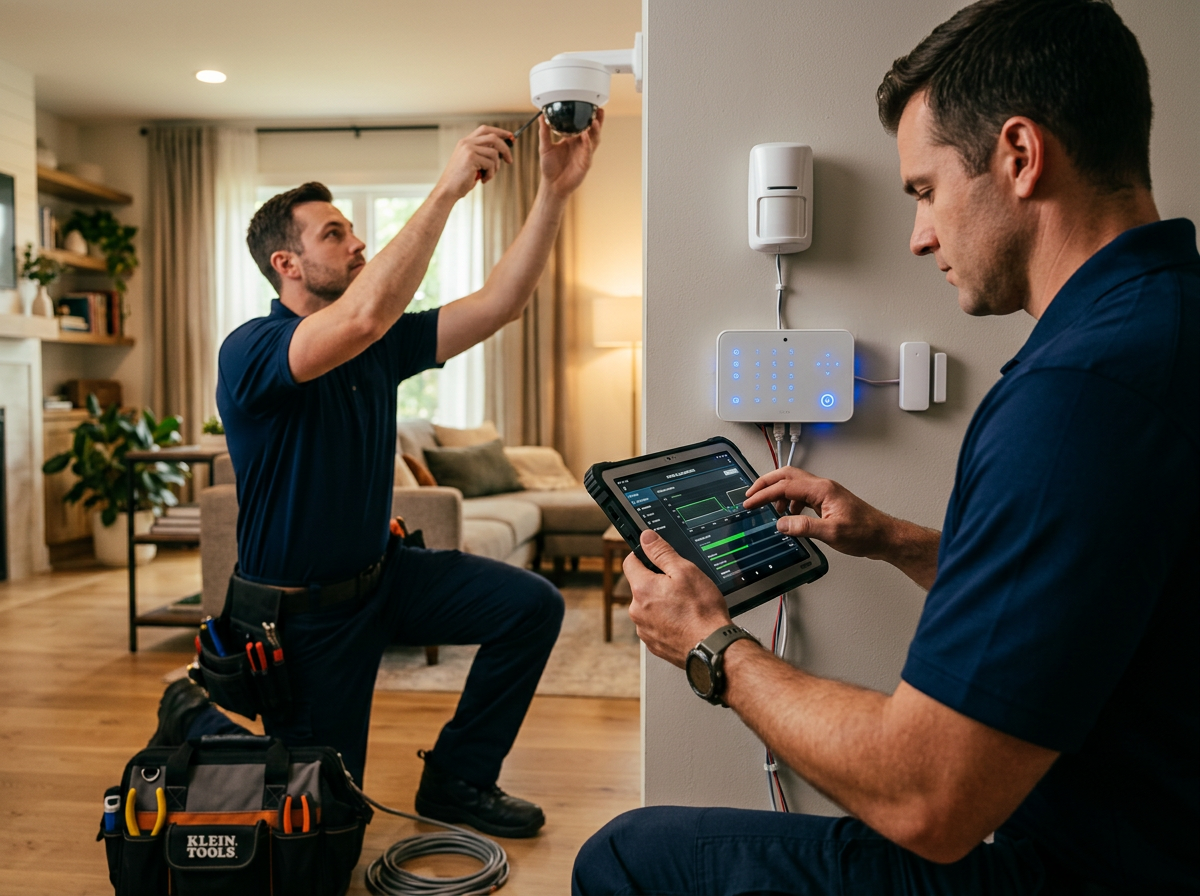
DIY installation costs less upfront and suits renters or simple setups. Professional installation costs more but delivers correct placement, clean wiring, code-compliant work, and a warranty.
A DIY camera kit can work fine for a single apartment, but once you're covering multiple entry points, integrating an alarm panel with monitoring, or securing a commercial space, the margin for error grows.
- DIY is best for: renters, single-room coverage, tight budgets
- Professional installation is best for: whole-home coverage, businesses, smart-home integration, anyone who wants a warranty
What Professional Security Monitoring Should Deliver
Professional security monitoring means a trained operator receives your alarm signal and acts within seconds, dispatching police or notifying you. That response quality is what the monthly fee buys.
Ask these questions before signing:
- Where is the monitoring center located, and is it UL-listed?
- What is the average alarm-to-dispatch time?
- How does the center verify a real alarm versus a false one?
- Can you reach a human at 2 a.m. without a long hold?
A provider that can't answer these clearly is guessing. The FCC guidance on alarm monitoring and phone line requirements is a useful starting point for understanding how monitoring signals travel and fail.
Security System Contract Terms You Need to Read
Contract terms decide what happens when you are unhappy, when you move, or when equipment fails. Read the cancellation clause, automatic renewal language, and equipment ownership section before signing, these cause the most disputes.
Automatic Renewal and the Cancellation Window
Many security contracts renew automatically for another full term, often 12, 24, or 36 months, unless you cancel within a narrow window, typically 30 to 60 days before the term ends. Miss it and you're locked in again.
What to do:
- Find the renewal clause and note the exact notice period and cancellation method.
- Calendar the cancellation deadline the day you sign, even if you intend to stay.
- Ask whether cancellation must be in writing and whether certified mail or email is accepted.
Early Termination Fees
Cancel before the term ends and most contracts charge an early termination fee. The formula varies:
- Percentage of remaining payments: a common structure is a percentage (often 50% to 100%) of the monthly fees remaining in the term.
- Flat fee: some contracts specify a fixed dollar amount.
- Remaining balance: the harshest structure requires payment of all remaining monthly fees for the full term.
Ask the provider to show the exact formula and calculate a sample fee for your proposed term. If they won't, that's a warning sign.
Equipment Ownership and Lease Terms
Equipment ownership is widely misunderstood. In many contracts the equipment is leased for the term and must be returned or purchased at the end; in others you own it from day one but the monitoring contract continues separately.
Ask:
- Do I own the equipment at the end of the term, or is it leased?
- If leased, what is the buyout price at the end of the term?
- If I cancel, must I return the equipment, and who pays shipping or removal?
Price Escalation
Monthly monitoring fees can increase mid-contract. Some contracts allow annual increases tied to a published index or fixed percentage; others allow increases at the provider's discretion with notice.
Ask:
- Can the monthly fee increase during the term?
- If so, is the increase capped, and is it tied to a specific index or percentage?
- How much notice is required before an increase takes effect?
Warranty, Service Calls, and Repair Terms
A warranty that sounds comprehensive may exclude the parts most likely to fail, or require you to pay for service calls even when the repair is covered.
Ask:
- What is the warranty period on equipment and on labor?
- Are service calls included, or is there a trip charge?
- What is the guaranteed response time for a repair, and is it in the contract?
Transfer, Assignment, and Sale of the Contract
If you sell the property, can the contract transfer to the buyer? Some allow assignment with notice; others require the buyer to sign a new agreement, which can complicate a home sale. Ask whether the contract can be assigned and how.
What to Negotiate
Contract terms are often more negotiable than buyers assume, especially with local and regional providers. Points to push on:
- Shorter initial term: ask for month-to-month or a 12-month term instead of 36 months.
- Longer cancellation window: ask for 60 or 90 days instead of 30.
- Capped increases: ask for a fixed annual cap or no increases during the initial term.
Get every agreed change in writing, in the contract itself, not a side email. If a provider won't put cancellation terms, fee formulas, or performance commitments in writing, walk away, no system is worth a multi-year obligation you can't exit.
Matching Equipment and Smart-Home Integration to Your Property
Equipment should follow the risk assessment, not the reverse. A typical residential setup includes door and window sensors, a motion sensor or two, an alarm panel, and cameras at the highest-risk entry points.
Smart-home integration is where most buyers get confused. Ask whether the alarm system works with the smart-home platform you already use, and whether you can arm, disarm, and view cameras from your phone reliably.
Commercial and Guard-Service Criteria Most Buyers Miss
Residential advice doesn't transfer cleanly to commercial accounts. A house has one decision-maker and one risk profile; an office, retail store, warehouse, or multi-site organization has multiple stakeholders, liability exposure, and often a compliance obligation to document security operations. Here's what commercial and guard-service buyers need to evaluate.
Start With a Documented Risk Assessment
For a commercial property, the risk assessment should be a written document, not a conversation, identifying:
- Assets: inventory, cash handling, pharmaceuticals, IT infrastructure, tenant records, controlled substances
- Threats: burglary, internal theft, robbery, trespass, vandalism, workplace violence, after-hours intrusion
- Vulnerabilities: unmonitored doors, blind spots in camera coverage, delayed police response, single points of failure in access control
That document drives staffing levels, technology selection, coverage hours, and escalation procedures. If a provider quotes a commercial account without producing one, you're buying a package, not a solution.
Guard-Service Quality: What to Ask Beyond the Sales Pitch
A guard service is a labor contract, and labor quality varies enormously. Ask for specifics on:
- Screening: Does the provider run background checks, drug screening, and employment verification? Are officers licensed where required? Many states regulate officers through a licensing board or state police; confirm current credentials.
- Training: What is the initial curriculum, how many hours, and what ongoing training is required? Ask whether it covers emergency response, report writing, de-escalation, and site-specific procedures.
- Post orders: Every site should have written post orders describing each shift, patrol routes, checkpoints, access control, visitor logging, escalation contacts. Ask to see a sample.
Service-Level Agreements and Measurable Performance
For any commercial security contract, guard, monitoring, or integrated, the service-level agreement (SLA) makes the provider accountable. A useful SLA defines:
- Response-time commitments: alarm-to-dispatch time, guard response to on-site incidents, and technician response to system outages
- Coverage commitments: scheduled patrol frequency, post coverage hours, and fill-rate for call-offs
- Uptime expectations: camera system availability, access-control availability, and monitoring center redundancy
A provider that won't commit to measurable performance in writing is asking you to trust a handshake. For multi-site organizations, insist on a single SLA template across locations, with site-specific schedules attached as exhibits.
Matching Staffing and Technology to the Risk
Not every commercial property needs a guard, and not every property can be secured with technology alone. A common pattern is layering:
- Low-risk, low-traffic sites: monitored alarm, access control, and camera coverage with remote verification
- Retail and cash-handling sites: cameras at registers and entrances, panic alarms, and either a guard during operating hours or a response service after close
- Industrial and warehouse sites: perimeter detection, gate access control, camera coverage of loading areas, and either roving patrols or a standing post depending on value at risk
The right mix follows from the risk assessment, not a vendor's catalog. Ask the provider to show how their proposed staffing and technology map back to the risks you identified.
Compliance, Privacy, and Data Handling
Commercial security operations generate records, camera footage, access logs, visitor logs, incident reports, guard tour data, raising legal and privacy questions residential buyers rarely face.
- Retention: How long is footage retained, and who can access it? Retention periods affect both storage cost and legal exposure.
- Access control: Who at the provider can view your footage or logs, and under what circumstances?
- Data security: Where is data stored, is it encrypted, and does the provider have a written information security policy?
Ask for written policies on each point. A provider that can't describe its data handling practices is a liability, not an asset.
Conclusion
Choosing a security provider is a vetting exercise, not a shopping trip. The right partner assesses your property, documents credentials, offers fair contract terms, and stands behind its monitoring with measurable performance.
That's the standard we hold ourselves to at Protection Pros USA. As a locally-owned provider serving homes and businesses since 2014, we handle professional installation of alarm and camera systems, deliver 24/7 monitoring, and tailor every setup to the property in front of us.
Frequently Asked Questions
What should I look for when choosing a security provider?
Start with licensing and insurance, then verify the company's reputation through customer reviews and references from similar properties. Ask about monitoring response time, equipment warranties, and whether installation is done by in-house technicians or subcontractors. Get a written risk assessment before signing anything. Compare at least three providers on the same scope of work so you can judge quotes fairly. A provider that answers these questions directly and in writing is usually worth a second conversation.
What questions should I ask a security company before signing a contract?
Ask how long the contract runs, whether it auto-renews, and what early termination costs. Confirm the monthly monitoring fee and whether it rises during the term. Find out who owns the equipment if you cancel. Ask about response time guarantees and whether they are written into a service-level agreement. Request proof of licensing and insurance. Finally, ask what happens if a camera or sensor fails: how fast does a technician come out, and is the visit covered?
Should I choose professional security monitoring or self-monitoring?
Professional security monitoring connects your alarm to a staffed center that can dispatch police or fire services, which matters when you are asleep, traveling, or unable to check your phone. Self-monitoring relies on you receiving alerts and acting on them. For frequent travelers and business owners, professional monitoring closes the gap when nobody is on site. Many systems allow both, so you can start with self-monitoring and add professional coverage later.
What should a security system installation include?
A complete installation covers a walkthrough to identify entry points and at-risk areas, mounting of cameras, sensors, and alarms, wiring or wireless setup, and a full test of every device. The technician should show you how to arm and disarm the system, use the mobile app, and review footage. You should receive documentation of what was installed and where. Ask whether the installer is employed by the company or contracted, since that affects who handles warranty repairs.
How can I tell whether a security provider is reliable?
Reliability shows up in specifics: a verifiable license number, proof of insurance, references you can actually call, and a written service-level agreement with response times. Check how long the company has operated in your area and whether reviews mention follow-up service, not just the sales process. Ask what happens at 2 AM when your alarm triggers. A provider that gives clear, documented answers about emergency response and repairs is more reliable than one that only talks about features.
How much does professional security monitoring typically cost?
Monitoring pricing varies based on the number of sensors, camera count, whether you need cellular backup, and the contract length. Rather than quoting a flat figure, ask each provider for a written breakdown of equipment cost, installation fees, and the monthly monitoring rate. Watch for promotional rates that jump after the first year. Request quotes for the same scope from multiple providers so the comparison is meaningful, and confirm the total cost across the full contract term.