Table of Contents
- Why Pet Owners Need a Different Approach to Home Security
- How Pet-Immune Motion Sensors Work
- Reducing False Alarms: Security System False Alarms Pets
- Door Sensors for Home Security: Perimeter Protection
- Security Cameras for Pets at Home: Monitoring and Peace of Mind
- Professional Monitoring and Emergency Response
- What to Look for in a Pet-Friendly Home Alarm System
- Frequently Asked Questions
Last Updated: October 21, 2026
Why Pet Owners Need a Different Approach to Home Security
If you have pets at home, a standard security system won't cut it. Most alarm systems treat motion as motion, they don't distinguish between an intruder and your dog running through the living room. That's where false alarms happen. And false alarms waste police resources, frustrate your neighbors, and can cost you money in some jurisdictions.
Pet owners need a best home alarm for pet owners that understands the difference. The right system keeps your family and furry friends safe without triggering alerts every time your cat jumps on the couch. At Protection Pros USA, your local ADT Authorized Provider through SafeStreets, we design systems specifically for homes with pets. We've been serving Milwaukee and southeastern Wisconsin since 2014, and we've learned what actually works.
The key is choosing equipment and placement that work together. Pet-immune motion sensors, strategic door and window protection, and professional monitoring create a system that protects your home without false alarms. Below, we'll walk you through exactly what to look for and how to build a best home alarm for pet owners that fits your household.
How Pet-Immune Motion Sensors Work
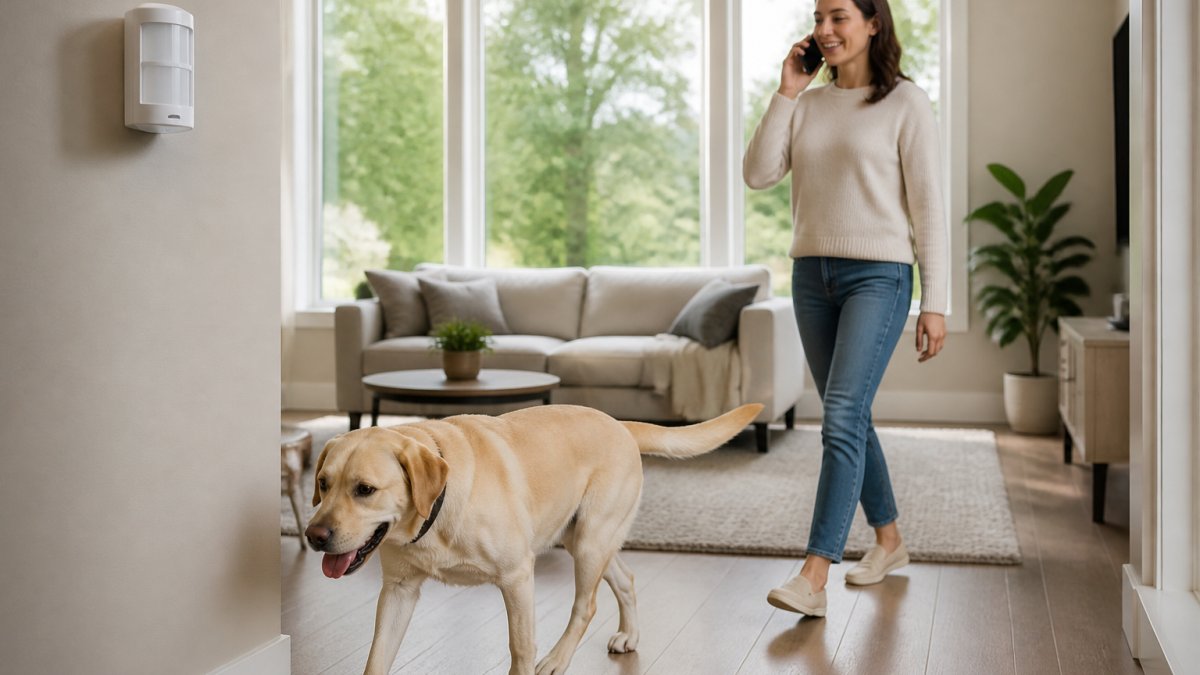
Pet-immune motion sensors use infrared technology to detect heat patterns. They're designed to ignore movement below a certain weight threshold, so your pets can move freely without triggering an alarm.
Sensor Sensitivity and Weight Limits
Pet-immune sensors typically ignore motion from animals under 40 to 50 pounds. The exact threshold depends on the sensor model and how it's calibrated. A small dog or cat won't trigger the alarm. A larger dog might, depending on the sensor and your settings.
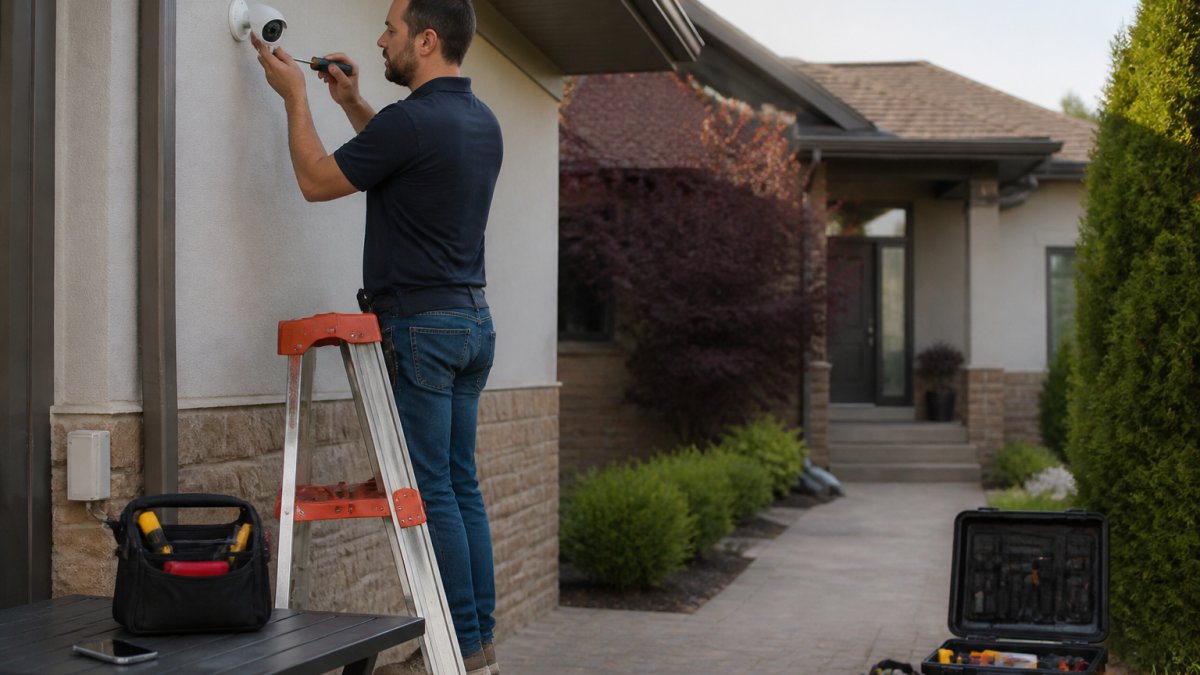
But weight alone doesn't tell the whole story. A 35-pound dog moving slowly across a room looks different to the sensor than a 35-pound person walking quickly. The sensor reads movement patterns, not just mass. This is why professional installation matters, a technician can test the sensor with your actual pets and adjust sensitivity to match your household.
Infrared Technology and Pet Detection
Passive infrared sensors detect changes in heat. When something warm moves through the sensor's view, the infrared pattern shifts. The sensor reads that shift as motion.
Pet-immune sensors have a narrower detection pattern than standard motion detectors. They ignore heat signatures near the floor, where pets typically move. A person walking upright at chest height registers as a threat. A pet at ground level does not.
This technology isn't perfect, though. A large dog standing on its hind legs, or a pet climbing shelves or furniture, might trigger the alarm. That's why placement and testing during installation are critical.
Reducing False Alarms: Security System False Alarms Pets
False alarms are the biggest complaint from pet owners with security systems. When your alarm goes off because your dog walked through the kitchen, it defeats the purpose. You lose trust in the system.
The best approach combines three things: the right sensors, smart placement, and knowing how to arm your system when pets are home.
Strategic Sensor Placement in Your Home
Motion sensors should protect entry points, not living spaces where pets spend time.
Place motion sensors in:
- Hallways leading to doors and windows
- Entryways and foyers
- Stairwells and landings
- Basement stairs and utility areas
- Rooms pets don't regularly enter
Avoid placing motion sensors in:
- Living rooms where pets lounge
- Kitchens where pets eat and move freely
- Bedrooms if pets sleep there
- Playrooms or any high-traffic pet areas
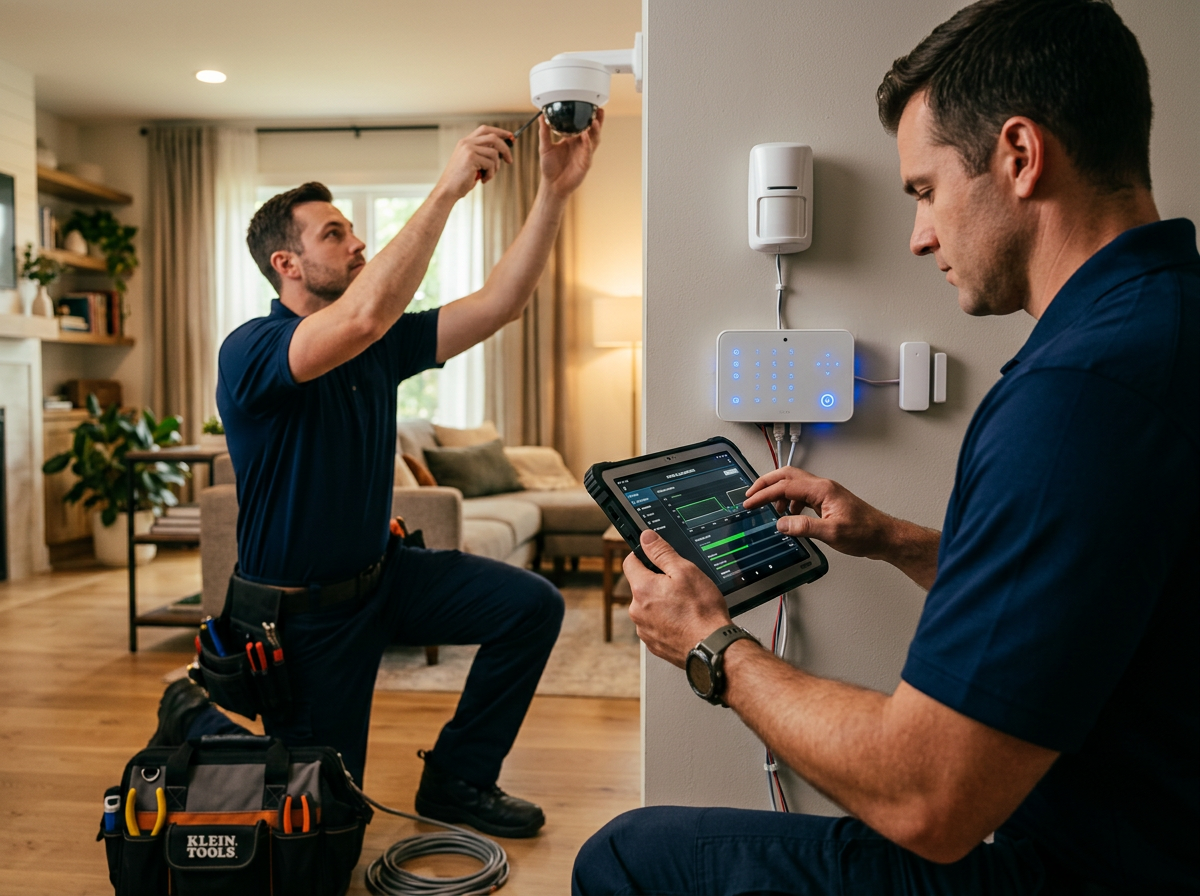
A professional security assessment walks through your home and identifies the best spots. The goal is coverage of entry points without sensors in pet zones. This is why a best home alarm for pet owners starts with a site visit, not a mail-order kit.
Arming Your System While Pets Are Inside
Most systems have an "at home" or "stay" mode. This arms perimeter sensors (doors and windows) while leaving interior motion sensors disarmed. Your pets can move anywhere inside without triggering an alarm.
The trade-off: you're not monitoring interior motion. If someone breaks in through a door or window, you'll know immediately. But if they move around inside, the motion sensors won't catch them. For most homeowners, that's a fair balance. Your doors and windows are your first line of defense.
Some systems let you arm individual sensors. You might arm motion in the basement and garage while leaving the living room and kitchen disarmed. A technician can show you which setup matches your layout and habits.
Door Sensors for Home Security: Perimeter Protection
Door and window sensors are the foundation of any home alarm. They work whether you have pets or not.
A door sensor has two parts: a magnet on the door or window frame, and a switch on the frame itself. When the door opens, the magnet moves away from the switch, triggering an alert. These sensors don't care about pets. A cat can't open a door.
Place door sensors on:
- All exterior doors (front, back, side, garage)
- Ground-floor windows
- Any window a person could realistically open from outside
- Sliding glass doors
A best home alarm for pet owners includes door sensors on every entry point. They're the most reliable part of your system because they don't depend on motion detection or judgment calls.
Glass Break Sensors and Entry Points
Glass break sensors listen for the sound frequency of breaking glass. When a window shatters, the sensor detects it and triggers an alarm.
These are especially useful for:
- Large windows near doors
- Windows in basements or less-visible areas
- Sliding glass doors
- Any window a burglar might target
Glass break sensors are pet-proof. Your dog can't break a window, and even if one breaks accidentally, you'll know right away. This adds a layer of protection that motion sensors can't provide.
Security Cameras for Pets at Home: Monitoring and Peace of Mind
Cameras serve two purposes: they deter burglars, and they let you see what's happening when you're away.
Indoor Cameras and Mobile Alerts
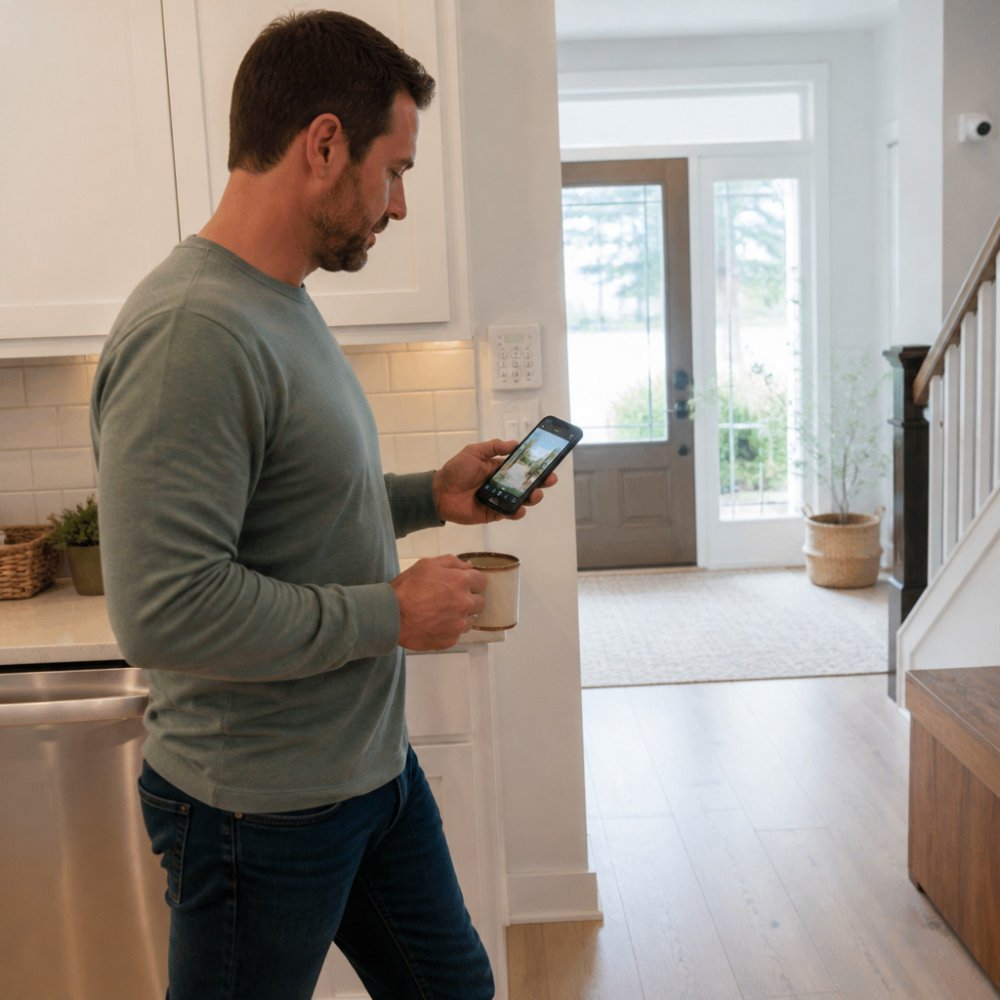
An indoor camera gives you live video on your phone. You can check on your pets during the day, see who's at the door, and verify alarms before police arrive.
Cameras with motion detection send alerts to your phone. You'll know if someone enters a room, even if they bypass door sensors. Unlike motion sensors, cameras don't trigger false alarms from pets. You see the video and decide if it's a threat.
The best home alarm for pet owners includes at least one indoor camera in a central location, a hallway, living room, or entryway. This gives you visibility without recording every moment your pets spend at home.
Google Nest Integration with ADT Monitoring
ADT is Google's security partner. That means ADT systems integrate Google Nest cameras and doorbells directly into your monitoring. You control cameras, sensors, locks, and thermostats all from the ADT+ app.
A Google Nest Doorbell or Nest Cam comes free with our current offer. You choose which one fits your needs. The Doorbell guards your entry. The Cam monitors a room inside.
Both work seamlessly with ADT's 24/7 professional monitoring. If motion is detected, your monitoring center can view the camera feed and verify what's happening before dispatching police. This reduces false alarms and speeds up response when there's a real threat.
Professional Monitoring and Emergency Response
A monitored system is only as good as the monitoring center behind it. ADT operates six 24/7 monitoring centers across the U.S. with built-in redundancy. When your alarm triggers, a trained operator answers within seconds.
The operator can listen through your system, view your cameras if available, and dispatch police, fire, or medical help based on what they see and hear. This verification step reduces false dispatches and gets the right help to your home faster.
For pet owners, professional monitoring is essential. A monitoring center can distinguish between a pet triggering a sensor and an actual break-in.
What to Look for in a Pet-Friendly Home Alarm System
A best home alarm for pet owners has these features:
- Pet-immune motion sensors with adjustable sensitivity
- Door and window sensors on all entry points
- Glass break sensors on vulnerable windows
- At least one indoor camera
- Professional 24/7 monitoring
- Mobile app for arming, disarming, and alerts
- Smart home integration for locks and thermostats
Backup Battery and Cellular Connection
Your system needs to work during power outages. A backup battery keeps sensors and the control panel running for hours. In Wisconsin, winter storms and ice damage power lines regularly. A backup battery ensures your system stays armed even when the power goes out.
Cellular backup is equally important. If your internet goes down, the system switches to a cellular connection to reach the monitoring center. This redundancy means your home stays protected no matter what happens.
Smart Home Control and Mobile App
You should be able to arm and disarm your system from your phone. You should see real-time alerts when doors open or motion is detected. You should control smart locks, thermostats, and cameras from one app.
This isn't just convenience. It's peace of mind. If you're away and get an alert, you can check your camera, lock your doors remotely, and contact your monitoring center with details. You're not helpless.
A best home alarm for pet owners gives you control and visibility. The system protects your home. The app puts that protection in your pocket.
Protection Pros USA offers a free full home security system with a $99 installation charge and a new 36-month monitoring agreement at $72.99 per month.
This is the best home alarm for pet owners because it combines pet-immune sensors, professional installation tailored to your home, and 24/7 monitoring with video verification.
Call 414-793-8532 or request your free quote at protectionprosusa.com. We'll schedule a free in-home security assessment.
*$99 Customer Installation Charge. 36-Month Monitoring Agreement required at $72.99 per month ($2,627.64). Form of payment must be by credit card or electronic charge to your checking or savings account. Early termination fees apply.
Frequently Asked Questions
Will pets set off an ADT motion detector?
Pet-immune motion sensors in ADT systems use passive infrared technology that filters out smaller movements typical of pets. The sensors are calibrated to detect human body heat and motion patterns while ignoring pets within specified weight limits. When properly installed and adjusted by a certified technician, these sensors significantly reduce false alarms caused by pets moving through your home.
How can I reduce false alarms when I have pets?
Strategic sensor placement is key to reducing false alarms. Position motion sensors high on walls, away from pet pathways, and avoid placing them directly over furniture where pets rest. Use door sensors and glass break sensors for perimeter protection instead of relying solely on motion detection. ADT's professional installation team can assess your home layout and pet behavior to optimize sensor placement specifically for your situation.
Can a home alarm system be armed while pets are inside?
Yes. With a properly configured ADT system using pet-immune motion sensors, you can arm your alarm while pets remain inside your home. The key is having sensors calibrated for your pet's size and behavior, and positioning them to avoid triggering false alarms. Your Protection Pros USA technician will test the system with your pets present to ensure reliable performance before you rely on it.
What security system features matter most for pet owners?
Pet owners should prioritize pet-immune motion sensors, door and window sensors for perimeter protection, and security cameras for monitoring. A mobile app lets you arm/disarm remotely and receive alerts. Professional 24/7 monitoring ensures that if an alarm is triggered, trained operators can verify the alert and dispatch emergency response. Backup battery and cellular connection keep your system working during power outages, protecting both your home and your pets.