Last Updated: October 23, 2026
Quick Summary
A detached garage alarm system creates a separate security perimeter around a building physically isolated from your home, using entry sensors, motion detection, and 24/7 professional monitoring to protect tools, equipment, and vehicles that a standard house alarm cannot reach.
- Metal roofing and siding are the biggest signal blockers for wireless sensors in detached garages.
- Professional monitoring centers dispatch police within seconds when an alarm triggers, faster than self-monitoring through an app.
- Motion detectors placed 6 to 8 feet high and angled downward reduce false alarms from temperature swings, dust, and pests.
- A secondary panel, wireless repeater, or cellular communicator bridges connectivity gaps when a garage is far from the main house.
- Door sensors on entry doors catch intruders where they actually pass through, not on overhead garage doors.
Table of Contents
- Why Detached Garages Need Their Own Alarm System
- Understanding Connectivity and Signal Range for Detached Garages
- Installing a Garage Door Alarm Sensor
- Placement and Configuration of Garage Motion Detector Placement
- Adding a Security Camera for Detached Garage Monitoring
- Setting Up a Monitored Garage Alarm System With Professional Response
- Testing, Power Backup, and Ongoing Maintenance
- Frequently Asked Questions
Why Detached Garages Need Their Own Alarm System
A detached garage is one of the easiest entry points to your property. It sits apart from your home, often without direct visibility from windows.
Many homeowners assume the house alarm covers everything. It doesn't. A detached garage alarm system creates a separate perimeter around a building that's physically isolated from your home.
Here's what makes a detached garage vulnerable:
- No direct connection to your home (thieves can work undisturbed)
- Limited natural light and visibility from neighbors
- Often contains expensive tools, equipment, and vehicles
- May house utility systems or HVAC equipment
- Easier to access without triggering home sensors
A monitored detached garage alarm system gives you real protection: when an entry point is breached, sensors alert a 24/7 monitoring center, where operators verify the threat and dispatch police.
Understanding Connectivity and Signal Range for Detached Garages
Wireless sensors in a detached garage have to talk to your main alarm panel, and that link is where most detached-garage installs succeed or fail.
What actually limits range
Manufacturer range figures are measured in open air; real properties are not. The biggest signal killers, roughly in order:
- Metal: a steel roof, metal siding, or a metal garage door acts like a shield. This is the single biggest range killer on detached garages.
- Concrete and masonry: block and poured walls absorb signal more than wood frame.
- Distance: every wall and every extra 20-30 feet of separation adds up.
- Competing wireless traffic: Wi-Fi routers, cordless phones, and smart-home devices in the same bands can add noise.
- Grade and terrain: a garage set lower than the house, or a berm between the two, blocks more than flat ground.
A garage 40 feet away with a metal roof can be harder to reach than a wood-frame garage 90 feet away. Distance alone tells you little.
The four ways to bridge the gap
- Move the panel closer. Site the main panel on the wall of the house nearest the garage rather than in a central hallway; a certified advisor picks the location that shortens the wireless path.
- Add a wireless repeater. A repeater between the house and garage re-broadcasts sensor signals, the standard answer for a garage that is close but blocked. It belongs on the house side or in a window facing the garage, never inside the metal garage.
- Use a dedicated garage keypad or secondary panel. For a far or heavily shielded garage, a second keypad or panel gives sensors a local receiver that reports back over a stronger path.
- Go cellular at the garage. When the buildings are too far apart for a reliable wireless hop, a cellular communicator at the garage reports directly to the monitoring center independent of the house panel.
Why the communication path matters more than the sensor
Even a perfectly placed sensor is only as good as the path it reports on. ADT systems use redundant communication, cellular, internet, and landline, so if one path drops, another takes over, keeping a detached garage covered during a Wisconsin winter outage.
If your garage sits at the far edge of the lot or behind a metal building, contact us for a free assessment, we will tell you honestly whether a repeater, a secondary panel, or a cellular path is the right call for your layout.
Installing a Garage Door Alarm Sensor
A garage door alarm sensor detects when the door opens or closes and is one of the most important sensors in your detached garage alarm system. It has two parts, a magnet and a contact switch. When the door closes, the magnet holds the switch closed; when it opens, the magnet moves away and the switch triggers an alert.
Installation steps:
- Mount the contact switch on the door frame (stationary part)
- Mount the magnet on the door itself (moving part)
- Align them so they're 1/8 inch apart when the door is closed
- Test the sensor by opening and closing the door
- Verify the signal reaches your main panel
Place the sensor on the main entry door, not the overhead garage door, entry doors are where intruders actually pass through.
Professional installation ensures proper alignment and signal strength; a misaligned sensor can fail to trigger.
Placement and Configuration of Garage Motion Detector Placement
Motion detectors catch an intruder who gets past the doors and windows, but in a detached garage they're the sensor most likely to cry wolf, temperature swings, dust, pests, and a shaking overhead door all cause false alarms. Placement and configuration are how you get detection without them.
Where motion belongs, and where it does not
- Mount 6 to 8 feet high, angled down across the floor rather than straight out at eye level.
- Aim across the path an intruder must walk after entering, not at the tools or the vehicle, a sensor that only sees the back wall gives a thief time to grab and go.
- Keep it off walls that share a surface with the overhead door track, and away from windows that get direct sun.
- Stay clear of the furnace, water heater, and any space heater; rising heat reads as motion. Do not aim across the path of a pet or a resident cat.
The garage-specific false-alarm sources
In a detached garage, the usual culprits:
- Temperature swings. A cold Wisconsin morning after a warm night can shift the infrared picture enough to trigger a poorly placed sensor; mount away from exterior walls and out of direct sun.
- Dust and cobwebs. A dirty lens scatters infrared and creates phantom motion; wipe the lens at each test.
- Pests. Mice and insects crossing the lens trigger alerts; sealing gaps and a pet-immune setting help.
- Vibration. The overhead door, a passing truck, or a slamming entry door can shake a loosely mounted sensor; mount to solid framing, not the door track or a thin panel.
- Drafts. Air moving through a gap can read as a temperature change; seal the obvious gaps before blaming the sensor.
How motion fits with the other sensors
Motion is one layer, not the whole plan.
Sensitivity settings that actually work
Start at medium and tune from there. High sensitivity invites false alarms from pests and dust; low sensitivity misses a careful intruder. After any change, walk-test the field of view from several angles and adjust the angle before touching sensitivity.
For a placement plan built around your specific garage, its size, its door layout, and what is stored inside, see our residential security services or request a free assessment. We design the sensor layout before we install a single device.
Adding a Security Camera for Detached Garage Monitoring
A security camera provides video evidence and live monitoring alongside your detached garage alarm system.
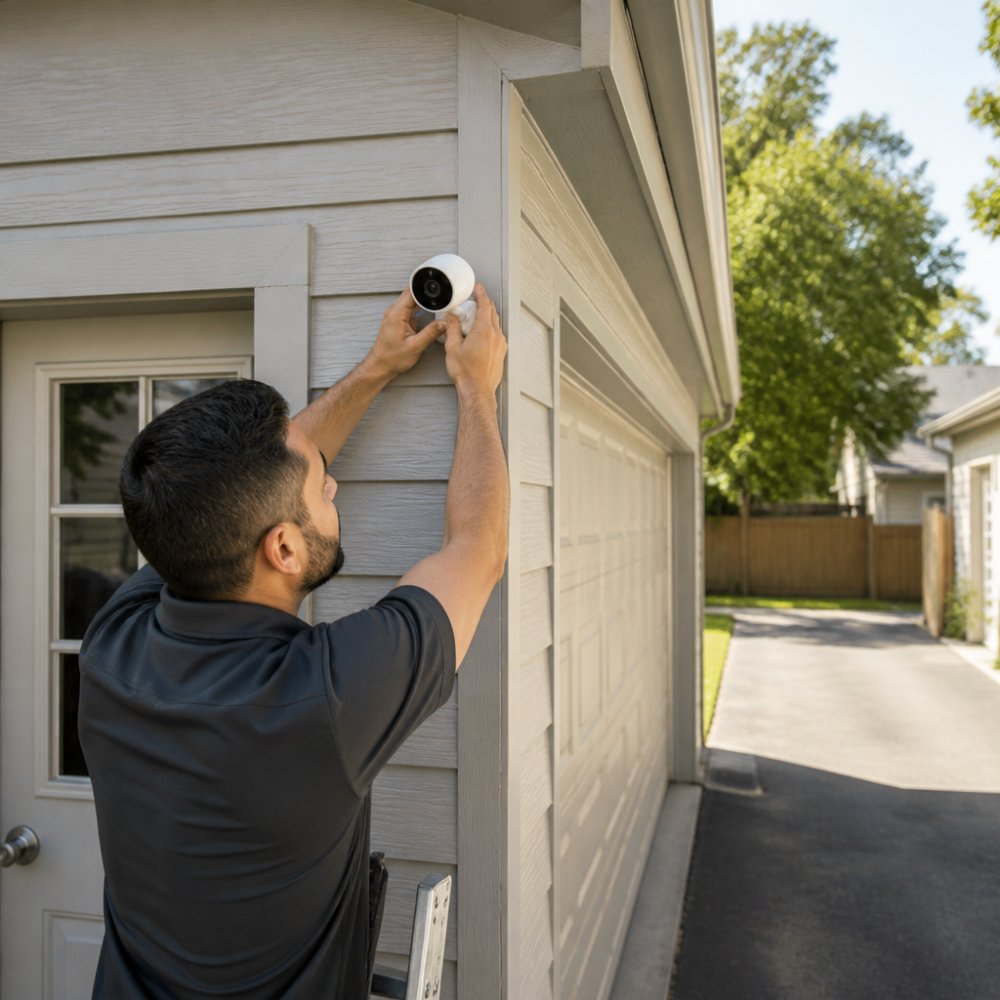
Camera placement:
- Corner of the garage facing the driveway
- High enough to see faces and license plates
- Protected from weather and tampering
- Positioned to capture the entry door
ADT is the only major security provider that integrates Google Nest cameras into its monitored system.
A camera pointed at the wrong angle misses critical details. Professional installation ensures the right angle, power, and weather protection, a camera that fails in winter doesn't help you.
Setting Up a Monitored Garage Alarm System With Professional Response
A monitored detached garage alarm system connects your sensors to a 24/7 professional monitoring center. When an alarm triggers, trained operators take action.
How professional monitoring works:
- An alarm triggers (door opens, motion detected)
- The signal reaches the monitoring center within seconds
- An operator calls you to verify the threat
- If you can't answer or confirm a break-in, police are dispatched
- The operator stays on the line and provides updates
ADT operates six ADT-owned 24/7 professional monitoring centers across the U.S. with built-in redundancy. If one center is busy, your alarm routes to another automatically.
Why professional monitoring matters:
Self-monitoring through an app is convenient but unreliable, you might be asleep, at work, or unable to reach your phone. A professional center never sleeps, and police respond faster to verified alarms.
Testing, Power Backup, and Ongoing Maintenance
A detached garage alarm system needs regular testing to stay reliable through winter outages and equipment failures.
Monthly testing:
- Open each door and window to verify sensors trigger
- Walk through the motion detector's field of view
- Check the control panel for error messages
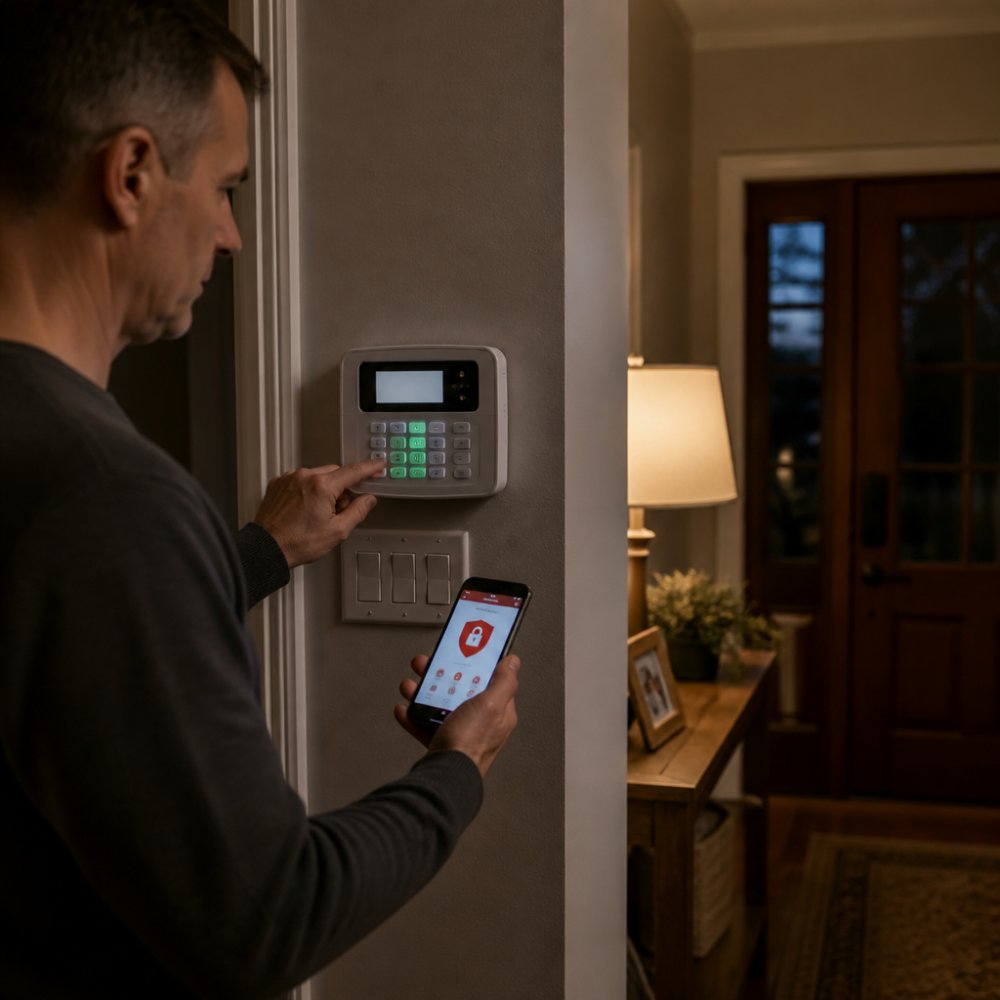
- Test the app to confirm you can arm and disarm remotely
Power backup:
Your alarm panel should have a battery backup that keeps the system armed and communicating during an outage. A detached garage is especially vulnerable then, no power means no heat, and thieves know you're distracted. ADT systems include cellular backup, so even if internet and power fail, the system still communicates. That's critical in Wisconsin winters.
Ongoing maintenance:
- Replace sensor batteries annually
- Check camera lenses for dirt or frost
- Test the siren to confirm it's audible
- Review monitoring center logs quarterly
Frequently Asked Questions
Can a detached garage alarm work if the home is out of range?
Yes, when professionally installed by Protection Pros USA, your detached garage alarm system uses cellular backup to maintain connection even if the main house is far away. ADT's monitored garage alarm system works independently, sending alerts directly to our 24/7 monitoring centers. We test signal strength during installation to ensure reliable communication. If connectivity issues exist, we recommend placement adjustments or additional equipment before activation.
Do you need a separate alarm system for a detached garage?
A detached garage typically requires its own entry point monitoring, motion detection, and alarm sensors integrated into your main security system. Protection Pros USA designs systems where your detached garage connects wirelessly to your main ADT panel, giving you unified control through the ADT+ app. You don't need two separate systems, one professionally installed system covers your entire property, including the detached structure, with 24/7 professional monitoring.
Where should you place sensors in a detached garage?
Door and window sensors go on every entry point: the main garage door, personnel door, and any windows. Motion detectors work best mounted 6-8 feet high in corners with a clear view of the interior. Glass-break sensors go on any large windows. For a detached garage, prioritize the entry door and garage door first, then add motion detection and cameras. Protection Pros USA conducts a free security assessment to identify the best sensor placement for your specific garage layout.
What happens if my power goes out during a Wisconsin winter storm?
ADT monitored systems include battery backup that keeps sensors, the control panel, and cellular communication active during power outages. Your alarm continues to detect intrusions and send alerts to our monitoring centers even without electricity. For extended outages, Protection Pros USA can discuss backup power options. Our 24/7 monitoring never stops, regardless of weather or power conditions.