Last Updated: November 1, 2026
Quick Summary
Most standard homeowners policies pay something toward alarm systems after a covered loss, but whether you get reimbursed depends on how the equipment is attached, which peril caused the damage, whether you own it, and your deductible and limits. Hardwired gear is usually covered under dwelling coverage, while portable devices fall under personal property with lower limits.
- Permanently attached gear like a wired control panel is typically handled under dwelling coverage.
- Plug-in cameras and spare sensors usually fall under personal property coverage, often with a lower limit.
- Leased equipment owned by the provider generally is not covered by your homeowners policy.
- Your deductible comes off the top, so a low-value stolen camera may not be worth filing a claim for.
- Report losses promptly and photograph damage before moving anything.
Table of Contents
- Will Homeowners Insurance Pay If Your Alarm System Is Damaged or Stolen?
- How Monitored Alarm Systems May Lower Your Homeowners Insurance Premium
- Monitored Versus Unmonitored Systems: What Insurers Look For
- Which Equipment May Qualify, Including Smoke and Water-Leak Sensors
- Burglary Damage and Homeowners Insurance Coverage: What Your Policy Pays
- Getting Proof for Your Insurer: The Home Security System Insurance Certificate
- Rented, Leased, and Professionally Monitored Equipment: Who Covers What
- Get Your Free Security Assessment and Check Your Insurance Discount
- Frequently Asked Questions
Will Homeowners Insurance Pay If Your Alarm System Is Damaged or Stolen?
Most standard homeowners policies will pay something toward alarm equipment after a covered loss, but the answer is rarely a clean yes or no. Before deciding whether an alarm is worth the cost, see the broader case for protecting your home.
Protection Pros USA, your local ADT Authorized Provider through SafeStreets, installs professionally monitored alarm systems for homeowners across the Milwaukee area.
Built-in equipment vs. personal property
Insurers generally treat alarm gear in one of two buckets:
- Dwelling coverage (Coverage A) typically applies to equipment that is permanently attached to the structure, a hardwired control panel, sensors mounted to door frames and window sashes, or cameras screwed into siding and soffits. Damage from a covered peril like fire, wind, hail, or a break-in is usually handled here.
- Personal property coverage (Coverage C) usually applies to equipment you can pick up and carry, a plug-in camera, a tabletop keypad, or a spare sensor still in the box. This bucket often carries a lower limit and may be subject to a sublimit for certain categories of property.
A single system can straddle both buckets. A 7-inch ADT Command touchscreen panel wired into a wall is treated differently than a Google Nest Cam sitting on a bookshelf, even if both were bought on the same day.
Named perils vs. open perils
Most standard policies are either named-peril (only the causes of loss listed in the policy are covered) or open-peril (everything is covered unless specifically excluded). Under a named-peril form, a break-in, fire, or windstorm is typically listed. Under an open-peril form, the question flips: you need to check whether alarm equipment is excluded. Common exclusions that catch homeowners off guard include:
- Wear and tear, mechanical breakdown, or a panel that simply stops working
- Power surges (some policies exclude them, some cover them, some require a rider)
- Damage from insects, rodents, or neglect
Deductibles and limits change the math
Even when a loss is covered, your deductible comes off the top. If a stolen camera is worth less than your deductible, filing a claim may not make financial sense, and a claim can affect your premium at renewal. Coverage limits work the other way: some policies cap how much they will pay for certain categories of personal property, and specialty electronics sometimes fall under those caps. Ask your agent two direct questions:
- Is my alarm equipment treated as part of the dwelling or as personal property?
- Is there a sublimit that applies to security electronics?
Owned vs. leased equipment
If you lease or rent your alarm equipment, or if it came bundled with a monitoring agreement where the provider retains ownership, your homeowners policy generally will not cover its loss. The provider's terms govern replacement, and you should read the monitoring agreement to see who is responsible for damage or theft. Owned equipment, the kind Protection Pros USA installs for homeowners who buy the system, falls under your own policy.
What a claim usually looks like
A common pattern after a break-in or a storm:
- Report the loss promptly. Most policies require timely notice, and delays can complicate a claim.
- Document the damage. Photograph the damaged panel, sensors, or camera before you move anything.
- Prove ownership. Keep receipts, your original installation paperwork, and your monitoring agreement. A system certificate from your provider helps here too. If you are still choosing a company, how to choose a security provider explains what documentation insurers tend to accept.
- Get a repair or replacement estimate. Your insurer may want one before approving payment.
- File and track. Keep a copy of everything you send.
If you are weighing a new system and want to understand what equipment you would own outright, see our residential security services or request a free assessment, we will walk the property and explain exactly what gets installed and how it attaches.
How Monitored Alarm Systems May Lower Your Homeowners Insurance Premium
A professionally monitored alarm may qualify you for a discount on your homeowners policy, but the size of that discount, and whether you get one at all, varies widely by insurer, by policy form, and by how the system is set up. Insurers view monitored systems as a way to reduce theft and fire losses, which is why many offer credits.
What insurers typically look for
Most carriers that offer an alarm credit are checking for a few specific things:
- Central station monitoring. The system reports to a 24/7 monitoring center that can dispatch police, fire, or medical responders, not just a siren that sounds locally.
- Professional installation. Some insurers want the system installed by a licensed provider rather than self-installed. Others accept either but ask for documentation.
- Specific device types. Intrusion sensors, glass-break detectors, smoke and fire detectors, carbon monoxide detectors, and water-leak sensors are the devices most commonly tied to credits, because they address the loss categories insurers care about most.
A common pattern is that insurers weight fire and water sensors more heavily than intrusion sensors, because fire and water damage tend to produce larger claims. That is worth knowing when you decide which devices to include.
How eligibility is verified
Expect to provide proof. The most common documents insurers request:
- A monitoring certificate or system certificate from your provider confirming the system is monitored and the start date
- An installed equipment list showing the devices in place
- Installation paperwork showing who installed the system and when
When you request a certificate, ask for the equipment list and monitoring start date in the same document so you only have to send one thing. Keep a copy with your policy papers. If your monitoring lapses or you change providers, tell your insurer, a discount tied to monitoring that is no longer active can be clawed back at renewal.
How to ask your insurer
Call your agent with these questions ready:
- Do you offer a homeowners discount for a professionally monitored alarm system?
- What documentation do you require, and how often do you re-verify?
- Does the discount apply to intrusion only, or do fire, CO, and water-leak devices count separately?
- Is the discount a flat credit or a percentage of premium?
- Does filing an alarm-related claim affect eligibility for the discount?
Write down the answers and the date you asked. If you switch carriers at renewal, ask the new insurer the same questions, the credit does not automatically follow you.
The cost-versus-savings math
A discount is only worth what it saves you against what you pay. Run the comparison honestly:
- Add up your annual monitoring cost. At Protection Pros USA, monitoring is $72.99 per month on a 36-month agreement, which is the number to use in your own math.
- Ask your insurer for the discount in dollars, not just a percentage. A percentage of premium is easy to misjudge; a dollar figure is not.
- Compare the two. If the annual discount is smaller than the annual monitoring cost, the system is not paying for itself through insurance alone, it is paying for itself through deterrence, faster emergency response, and peace of mind. That is a legitimate reason to buy, but it is a different reason than "the discount covers it."
A realistic framing: a monitored system may reduce your premium, but it is unlikely to eliminate the cost of monitoring. Treat the discount as a partial offset, not a rebate.
Where the local advantage matters
When your insurer asks for a certificate or an equipment list, you want a provider you can actually reach. Protection Pros USA is a Milwaukee company with local crews, not a 1-800 number, and we can pull your system details and monitoring confirmation without a long hold. If you are comparing systems and want to know what documentation your insurer will likely need, see our FAQ or request a free assessment and we will walk through it with you.
Monitored Versus Unmonitored Systems: What Insurers Look For
Insurers usually distinguish between monitored and unmonitored systems. A monitored system sends alarm signals to a monitoring center that can dispatch emergency responders. An unmonitored system only makes noise, which many insurers do not weigh as heavily.
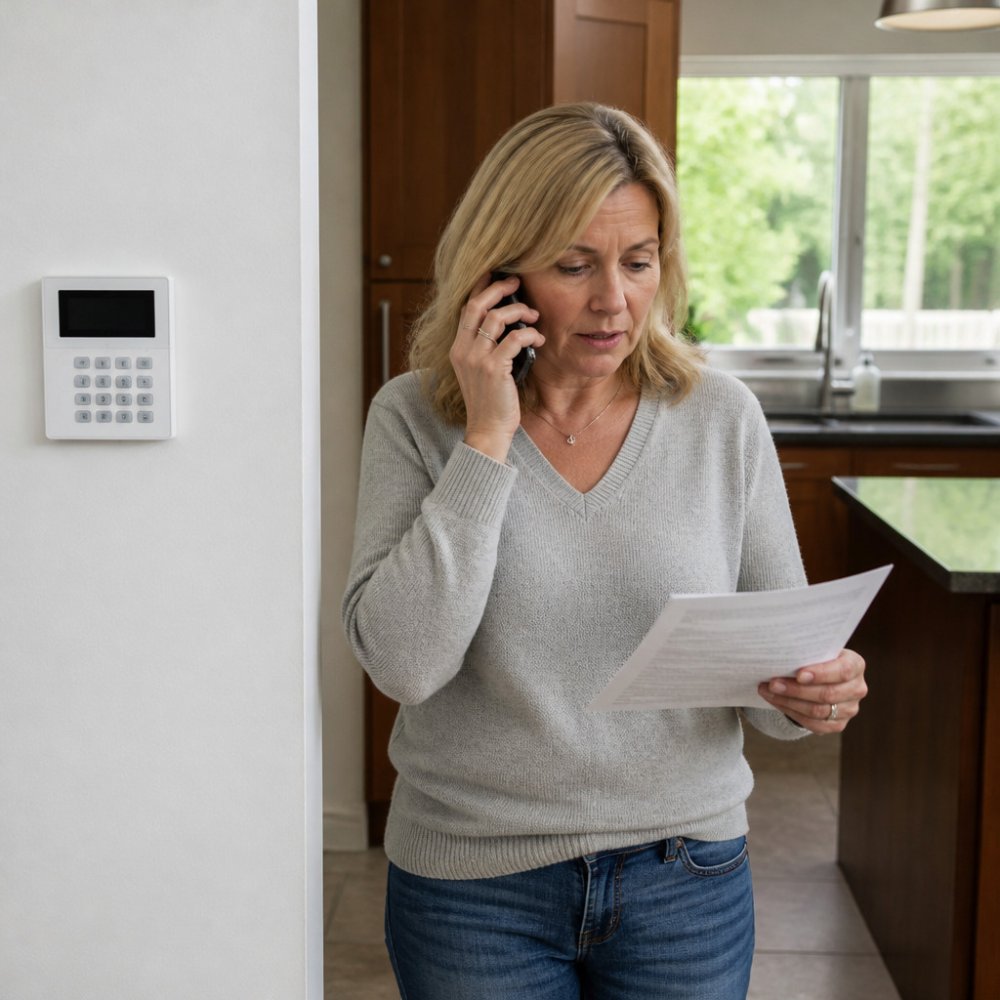
Expect to provide proof of monitoring and the system's installation details when you apply for a discount. Keeping your monitoring agreement current helps you avoid gaps in coverage.
Which Equipment May Qualify, Including Smoke and Water-Leak Sensors
Some insurers look beyond intrusion alarms. Smoke detectors, carbon monoxide detectors, and water-leak sensors can all be relevant because they address fire and water damage, two of the largest sources of homeowners claims.
- Intrusion sensors and glass-break detectors
- Smoke and fire detectors
- Carbon monoxide detectors
Confirm with your insurer which devices count toward a discount before you buy.
Burglary Damage and Homeowners Insurance Coverage: What Your Policy Pays
After a burglary, your policy may pay to repair doors, windows, and locks, and to replace stolen belongings. Your deductible and coverage limits determine how much you receive. Some policies also set separate limits for certain categories of property.
Document everything. Take photos of damage, keep a list of stolen items, and save receipts or records that show value. Report the loss promptly, since many policies require timely notice.
Getting Proof for Your Insurer: The Home Security System Insurance Certificate
Insurers often request documentation before applying a discount. A system certificate or monitoring confirmation from your provider usually serves as that proof. Keep a copy with your policy papers.
When you request the certificate, ask for the installed equipment list and the monitoring start date. Insurers may ask for these details when verifying your eligibility.
Rented, Leased, and Professionally Monitored Equipment: Who Covers What
Leased or rented equipment usually belongs to the provider, not the homeowner. In that case, your homeowners policy generally does not cover its loss, and the provider's terms govern replacement. Owned equipment falls under your own policy.
Read your monitoring agreement to see who is responsible for equipment damage or theft. Ask your insurer how leased devices affect your discount eligibility.
Get Your Free Security Assessment and Check Your Insurance Discount
Protection Pros USA offers a free, no-obligation security assessment, with a response within 24 hours. Browse the full range of residential and monitoring services before booking.
Our free full home security system includes door sensors, a glass break sensor, and a 7-inch ADT Command touchscreen panel.
Call 414-793-8532 or request your free quote at protectionprosusa.com. Our office is open Mon-Sat 9am-6pm CST, and monitoring runs 24/7.
*$99 Customer Installation Charge. 36-Month Monitoring Agreement required at $72.99 per month.
Frequently Asked Questions
Does homeowners insurance cover the cost of an alarm system?
Usually not directly. Most homeowners policies do not pay to buy or install an alarm system as a standalone expense. However, alarm equipment that is part of your home, such as hardwired sensors, may be treated as part of the dwelling and covered if it is damaged in a covered loss like fire or a break-in. Portable devices may fall under personal property with its own limits. Check your declarations page or ask your agent how your policy classifies the equipment, and keep receipts and installation records in case you need to file a claim.
Can a home security system lower my homeowners insurance premium?
It may. Many insurers offer a discount for homes with a monitored alarm system, and some also reward smoke, fire, and water-leak sensors. The size and eligibility of the discount depend on your insurer, your policy, and the type of system you have. Protection Pros USA, your local ADT Authorized Provider through SafeStreets, can provide documentation of your monitoring service so you can ask your insurer about the discount directly.
What proof does an insurer need to give an alarm-system discount?
Insurers typically want written confirmation that the system is installed and professionally monitored, often in the form of a certificate or letter from the monitoring company. Some carriers also ask for the equipment list and proof that monitoring is active and under contract. Requirements vary by company, so ask your agent exactly what documentation they accept before you request a discount.
Do I need to tell my insurance company when I install a security system?
Yes, it is a good idea. Telling your insurer when you install a monitored alarm lets them check whether you qualify for a discount and keeps your policy accurate. Failing to report significant changes to your home's protection could complicate a future claim. Ask your agent what documentation they need and whether the discount applies automatically or must be requested.